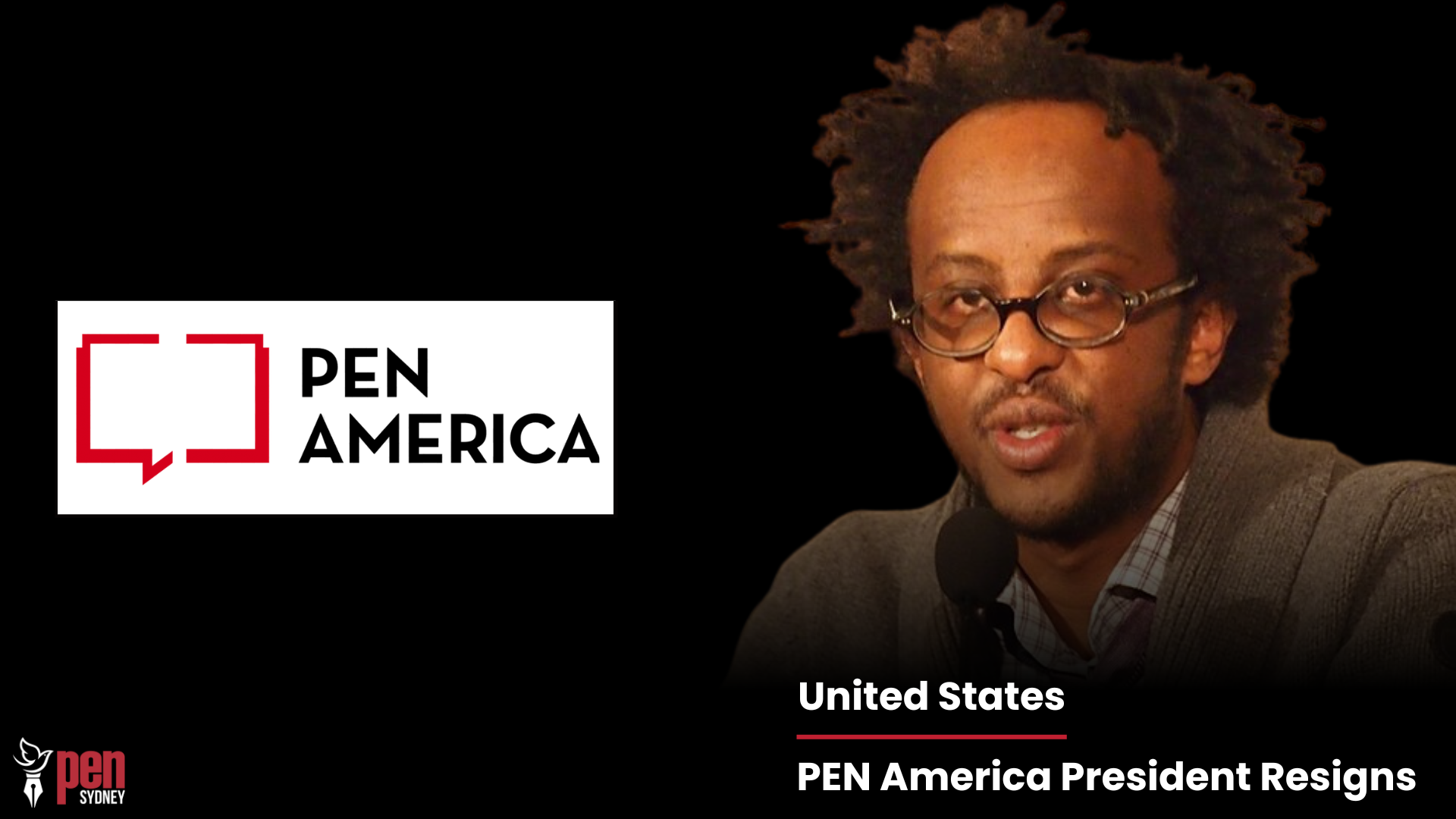
On July 9 prominent Ethiopian-American novelist Dinaw Mengetsu resigned his position as president of PEN America after the organisation published a piece reaffirming its opposition to participation in, or advocacy for, cultural and academic boycotts.
PEN America’s article reported dozens of leading voices in Israeli and Jewish literature careers that have been adversely affected by the rising international backlash against Israel’s atrocities in Gaza and across the West Bank. Jerusalem-based literary agent Deborah Harris told PEN America that some editors have asked her not to submit Israeli authors in the future, and, in an extreme instance, the award-winning author R. F. Kuang was hounded online for including a fictional Israeli character in her 2026 book Taipei Story. The fraught politics of Israel and Palestine has also led to the marginalisation of authors who protest Israel’s genocide, with writers disinvited from major literary events for their past comments.
Although Mengetsu did not deny the testimony of Israeli and Jewish authors in PEN America’s article, ‘A Silent Moratorium’, he charged PEN America with conducting “pseudo-advocacy” by selectively defending writers from political retaliation. He was concerned PEN America’s opaque approach to the right to boycott might provide ammunition to legislators intent on curbing the Boycott, Divestment, and Sanctions (BDS) movement, a movement already subject to intense legal scrutiny in the United States.
The unfair and unjust treatment of Jewish, Israeli, as well as Palestinian writers restricts the flow of ideas and contravenes PEN’s mission as enumerated in the PEN Charter. PEN stands for “the principle of unhampered transmission of thought within each nation and between all nations” while promising to oppose “any form of suppression of freedom of expression…whenever this is possible”.
Writers must not be silenced on account of their nationality, ethnicity, or religion. Nonetheless, boycott and protest remain legitimate modes of political expression and deserve protection.
Image credit: SLOWKING