
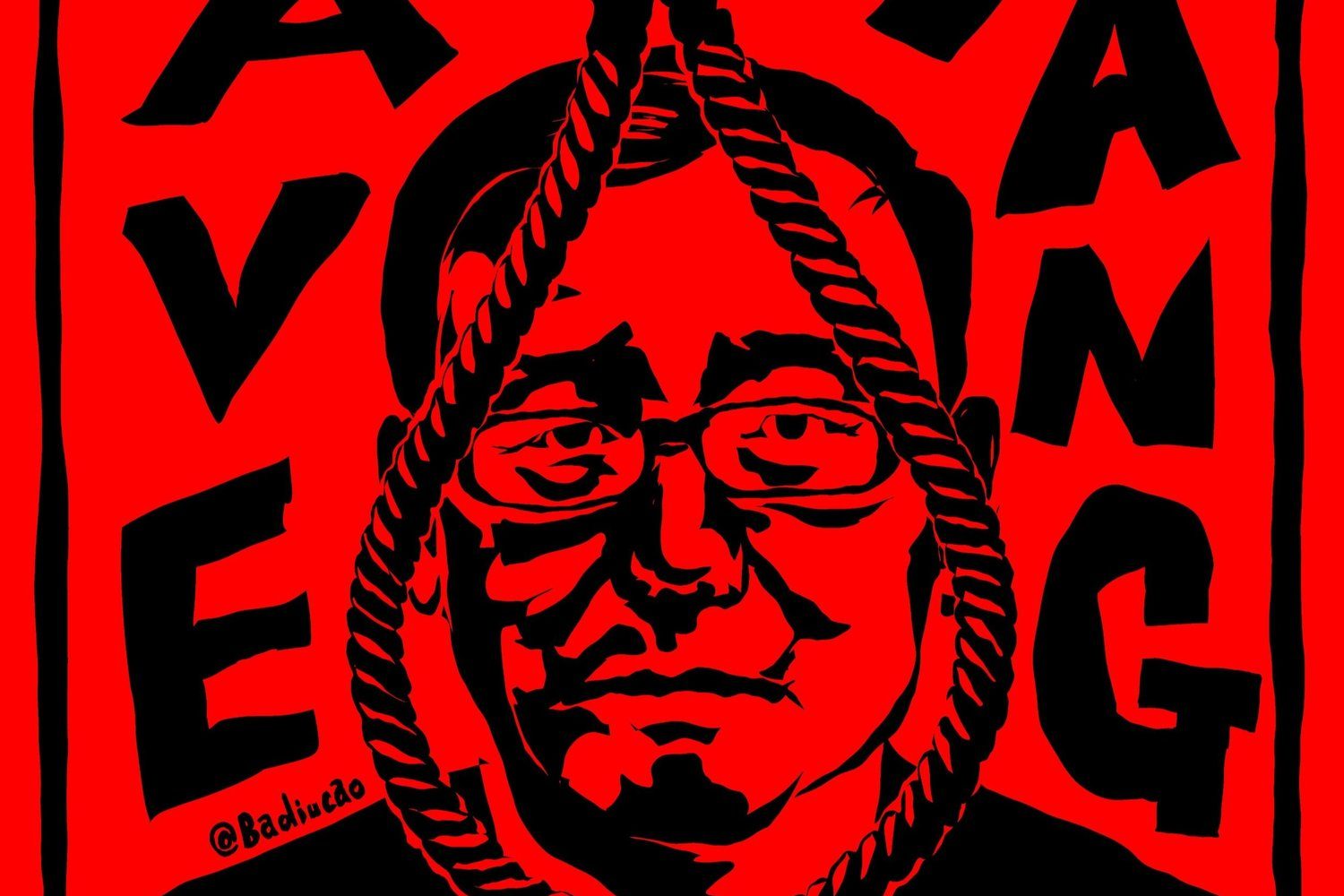
Writer, academic and Honorary President of Independent Chinese PEN Centre, Liu Xiaobo, has been in prison since 2009. He won the Nobel Peace Prize in 2010, while in prison.
Waleed Aly
– Free Speech, Vilification and Power
– 26 May, 1.00 pm
– Sydney Dance 2, Wharf 4/5, Hickson Road, Walsh Bay
Waleed Aly is a lecturer in politics at Monash University, and hosts Radio National’s DRIVE program and BIG IDEAS on ABC Television. He also writes for writes the The Australian, Sydney Morning Herald, The Guardian and The Sunday Times of India. He is the author of People Like Us: How Arrogance is Dividing Islam and the West and Quarterly Essay: What’s Right? The Future of Conservatism in Australia.
Waleed will deliver Sydney PEN’s first Free Voices 2013 lecture at the Sydney Writers' Festival on Sunday 26 May at 1.00 in Sydney Dance 2. He will speak on Free Speech, Vilification and Power.
Membership of International PEN is through Sydney PEN, its local centre. Membership is open to all who subscribe to and agree to abide by the aims of International PEN as expressed in its International PEN Charter.
By joining Sydney PEN you will be supporting the work of an historical Australian organisation, with a focus on advocating for these rights in our Asian and Pacific region.
**PEN: Free Voices Lecture Series.
Day of the Imprisoned Writer, Special Event.
Randa Abdel-Fattah
Censoring Palestine: the Nakba Law**
In 2011, Israel enacted the “Budgets Foundations Law (1985) – Reducing Budget or Support for Activity Contrary to the Principles of the State”. The ‘Nakba Law’ enables “the withholding of funds to public institutions deemed to be involved in publicly challenging the founding of Israel as a Jewish state or any activity denying the existence of Israel as a Jewish and democratic state.” The law seeks to prevent Palestinians in Israel from exercising their right to run an academic conference, conduct historical research, hold a seminar, screen a film or stage a play on a seminal event in their history. It also means that discussion of the definition of the state is deemed to be seditious.
Activists, both Arab-Israelis and Israelis, are challenging the censorship of the Nakba, both legally and through protests, commemoration activities and education. They are doing so because the Nakba law is simply a codification of what has been happening to Palestinians from 1948 until today: the censorship of the collective memory, free speech, history, equality and dignity of Palestinians.
Randa Abdel-Fattah is the author of eight novels. She is also a lawyer, human rights activist and a doctoral candidate at Macquarie University researching Islamophobia. Randa has been a commentator on TV programs such as Q & A, Lateline, Insight, Channel 10 News, The Drum and Sunrise, and is frequently sought for comment in the media on issues pertaining to Muslims, the Israeli-Palestinian conflict and asylum seekers. In 2010 she was invited by the US State Department as the Australian representative in a 3- week program across the US to investigate multiculturalism and policy.
Sydney PEN joins PEN International’s Writers in Prison Committee in protesting the continued detention of academic, blogger and human rights activist Dr Abduljalil Al-Singace and human rights defender Abdulhadi Al-Khawaja, after an appeals court ordered a retrial of their case but ruled that they should remain in jail pending a new verdict. No date has yet been set for the re-trial, which will be heard in a civilian court.
PEN continues to call for the immediate and unconditional release of all those currently detained in Bahrain for the peaceful exercise of their opinions, including Dr Al-Singace and Abdulhadi Al-Khawaja, and urges a full and independent investigation into allegations that they were tortured in pre-trial detention. It reminds the Bahraini authorities of their obligations to protect the right to freedom of expression as guaranteed by Article 19 of the International Covenant on Civil and Political Rights, to which Bahrain is a signatory.
According to PEN’s information, on 30 April 2012 the Court of Cassation ordered a retrial in the case of all twenty-one opposition activists, writers and bloggers convicted by a special security court on 22 June 2011 of ‘plotting to overthrow the government’ for their peaceful opposition activities. They include academic, blogger and human rights activist Dr Abduljalil Al-Singace and human rights defender Abdulhadi Al-Khawaja, who were each sentenced to life imprisonment after calling for political reform and reporting on human rights abuses in the country. After the hearing the official Bahrain News Agency reported that the retrial will hear ‘testimony from prosecution and defense witnesses…once more as if it is a new trial…". None of the defendants were present at the court hearing, and all fourteen detainees are expected to remain in custody for the duration of their appeal, except for Al Hurra Yousif Mohammed who was released after yesterdays’ hearing having served his sentence.
Seven of the defendants were convicted in absentia, including blogger Ali Abdul Imam of Bahrain Online, sentenced to fifteen years in prison. The appeal of the fourteen detainees was heard on 6 September 2011 by the military-run National Safety Court of Appeal, and all the sentences were upheld on appeal at a brief hearing on 28 September 2011. The trial did not meet with international standards of fairness, and there has been no independent investigation into allegations by some of the defendants, including Dr Al-Singace and Mr Al-Khawaja, that they were tortured in pre-trial detention, when they were held incommunicado.
PEN International's WiPC supported a trial observation mission by British Barrister Sarah Elliott of Doughty Street Chambers to Bahrain for the verdict in September 2011 and for hearing of the Court of Cassation on 23 April 2012 in partnership with the International Freedom of Expression Exchange (IFEX). It is supported by IFEX member the Bahrain Centre for Human Rights (BCHR) and the Gulf Centre for Human Rights (GCHR), both of which Al-Khawaja is a founder. She received permission by the authorities to attend the Court’s hearing on 23 April which was then postponed for one week, but there was no reply to the request to allow her to return to attend the 30 April hearing.
Abdulhadi Al-Khawaja has pledged to continue his hunger strike, which he started on 8 February 2012, ‘until freedom or death’. He was finally permitted a visit by his wife on 29 April, who claimed he had been force-fed without his consent. Bahraini officials claim al-Khawaja agreed to all procedures. According to his family he is close to death.
TAKE ACTION
Please send appeals:
Protesting the continued detention of Dr Abduljalil Al-Singace and Abdulhadi Al-Khawaja solely for peacefully exercising their right to free expression;
Demanding a full independent investigation into allegations that both men have been tortured and ill-treated in detention;
Seeking assurances that both men have access to all necessary medical care whilst detained;
Urging the Bahraini authorities to abide by their obligations under Article 19 of the International Covenant on Civil and Political Rights (ICCPR), and calling for the immediate and unconditional release of all those currently detained in Bahrain solely for the peaceful expression their opinions, including Dr Al-Singace and Abdulhadi Al-Khawaja.
Send appeals to:
His Majesty Sheikh Hamad bin Issa Al-Khalifa
King of Bahrain
Office of His Majesty the King
P.O.Box 555
Rifa’a Palace
Kingdom of Bahrain.
Fax: +973 176 64 587
Sheikh Khalid bin Ali Al-Khalifa
Minister of Justice and Islamic Affairs
Ministry of Justice and Islamic Affairs
P.O.Box 450
Al-Manama
Bahrain.
Fax: +973 175 31 284
Dr. Fatima AL-Balushi
Minister of Human Rights and Social Development, Acting Minister of Health
Ministry of Human Rights and Development
Manama
Kingdom of Bahrain
Fax: +973 17101955
email: pr "at" social.gov.bh
Please copy appeals to the Australian Embassy in Saudi Arabia, which is responsible for Bahrain.
Mr Neil Hawkins
Ambassador to Saudi Arabia
Abdullah bin Hozafa Al-Sahmi Avenue
Diplomatic Quarter
Riyadh
Saudi Arabia
For more information please contact Cathy McCann at International PEN Writers in Prison Committee, Brownlow House, 50/51 High Holborn, London WC1V 6ER, Tel.+ 44 (0) 20 7405 0338, Fax: +44 (0) 20 7405 0339, email: cathy.mccann@pen-international.org
Sydney PEN and PEN International’s Writers in Prison Committee are seriously concerned for the welfare of literary translator Mohammad Soleimani Nia, who has started a hunger strike in protest at his detention. Soleimani Nia has been held without charge since 10 January 2012, and is said to be in a fragile condition. PEN fears that he is held in violation of Article 19 of the International Covenant on Civil and Political Rights, to which Iran is a signatory, and calls for his immediate and unconditional release.
Iranian translator, Mohammad Soleimani Nia, who was arrested without charge in Jan 2012
According to PEN’s information, Mohammad Soleimani Nia, aged 39, was detained on 10 January 2012 after responding to a summons to report to the Revolutionary Court in Tehran. After arriving at court, he was accompanied by security guards to his home in Karaj, outside Tehran, which he shares with his parents. The guards searched the house and seized computer equipment and documents before taking him away.
Soleimani Nia has been under pressure since late November 2011, when he was questioned by security and intelligence officers and banned from leaving Iran. He is believed to be targeted for developing the professional social networking website U24, launched by Soleimani Nia in April 2007 to help Iranian professionals build links with one another.
Soleimani Nia is translator of the book Funny in Farsi by Iranian American writer Firoozeh Dumas. He is held in solitary confinement in Tehran’s Evin prison, notorious for its harsh conditions. Prior to the start of his hunger strike on 2 April 2012 he was said to be in a fragile condition, leading to mounting concerns for his well -being.
TAKE ACTION
Please send appeals:
protesting the detention of literary translator Mohammad Soleimani Nia;
calling for his immediate and unconditional release in accordance with Article 19 of the International Covenant on Civil and Political Rights, to which Iran is a signatory; and
expressing serious concerns for his well-being in detention, and urging that he has full access to his family, lawyer and medical care.
Send appeals to:
Supreme Leader of the Islamic Republic
His Excellency Ayatollah Sayed ‘Ali Khamenei,
The Office of the Supreme Leader
Shoahada Street,
Qom,
Islamic Republic of Iran
Head of the Judiciary
Ayatollah Sadeqh Larijani
Howzeh Riyasat-e Qoveh Qazaiyeh (Office of the Head of the Judiciary)
Pasteur St., Vali Asr Ave., south of Serah-e Jomhouri
Tehran 1316814737
Islamic Republic of Iran
Please send a copy of your appeal to:
President:
His Excellency Mahmoud Ahmadinejad
The Presidency
Palestine Avenue
Azerbaijan Intersection
Tehran, Islamic Republic of Iran
Fax: Via Foreign Ministry: +98 21 6 674 790
(mark: “Please forward to H.E. President Ahmadinejad”)
Sydney PEN recommends that supporters copy their appeal to the Iranian embassy in Australia, asking them to forward it and welcoming any comments:
His Excellency Dr Mahmoud BABAEI
Ambassador Extraordinary and Plenipotentiary
Embassy of the Islamic Republic of Iran
25 Culgoa Circuit
O'Malley ACT 2606
Tel: (02) 6290 2430
Fax: (02) 6290 2825
Email: amb.office "at" iranembassy.org.au
For further information please contact Cathy McCann at International PEN Writers in Prison Committee, Brownlow House, 50/51 High Holborn, London WC1V 6ER, Tel.+ 44 (0) 20 7405 0338, Fax: +44 (0) 20 7405 0339, email: cathy.mccann "at" pen-international.org
The Writers in Prison Committee of PEN International is seriously concerned about the prolonged detention of poet, journalist and activist Ericson Acosta, who has been held without trial since February 2011. PEN International fears that he may be targeted for his legitimate human rights activities, and calls for his immediate and unconditional release if held solely for the peaceful exercise of his right to freedom of expression, as guaranteed under Article 19 of the International Covenant of Civil and Political Rights, ratified by the Philippines.
Ericson Acosta (39) is a poet, songwriter and activist. He is a former editor of the student publication Philippine Collegian, and chairperson of the student cultural group Alay Sinin. He also worked as cultural writer for the Manila Times, and has acted in and directed a number of theatre plays.
On 13 February 2011, Acosta was arrested by the military, in San Jorge, Samar, east of the country, on suspicion of being a member of the New People’s Army (NPA). At the time of his arrest, Acosta was said to be unarmed and conducting research on human rights and environmental issues in the area. He was reportedly held incommunicado for three days, during which he was ill-treated, tortured and threatened with death. On 16 February 2011, Acosta was charged with the illegal possession of explosives at the Regional Trial Court Branch 41 in Gandara, Western Samar. Under Philippine law, this is a non-bailable offence. Acosta remains in custody pending action by the investigating prosecutor. Under Philippine law, the time limit from an arraignment to trial is set at 180 days by the Speedy Trial Act (RA 8493). However, over one year after Acosta’s arrest and arraignment, the prosecutor has yet to file a formal complaint to the court.
Acosta is detained at the Calbayog sub-provincial jail, which is a civilian detention facility. Since Acosta’s arrest, there has been a constant presence of officers from the 8th Infantry Division of the Philippine Army outside the prison, who reportedly intimidate his family and other visitors. His defense team filed a complaint about this matter before Philippines’ Commission on Human Rights (PCHR), but has received no response. In September 2011, Acosta filed a petition for the review of his case before the Philippines’ Department of Justice (PDOJ), alleging irregularities and rights abuses; however, despite the 60-day deadline to respond to the petition, the PDOJ’s decision remains pending.
While in prison, Acosta has continued to write and to give press interviews. For further information on his case, see Amnesty International’s statement; check the campaign site for his release where you can also read some of his recent poems, and the Free Ericson Acosta Facebook page. The Philippines PEN Centre has been active in supporting his case.
TAKE ACTION
Please send appeals:
expressing serious concern for the prolonged detention without trial of poet, journalist and activist Ericson Acosta;
calling for his immediate and unconditional release if held solely for the peaceful exercise of his right to freedom of expression, as guaranteed under Article 19 of the International Covenant of Civil and Political Rights, ratified by the Philippines.
Send appeals to:
His Excellency Benigno Simeon Aquino III
President
Republic of the Philippines
Malacanang Palace
Manila
Philippines
Fax: +63 2 735 6167
Email: corres "at" op.gov.ph
Hon. Leila M. De Lima
Secretary, Department of Justice (DOJ)
Padre Faura Street
Ermita, Manila, 1000
Philippines
Fax: +63 2 523 9548
Email: lmdelima "at" doj.gov.ph / doj.delima "at" gmail.com
Please contact the PEN WiPC office in London if sending appeals after 30 April 2012
For further details contact Cathy McCann, 50/51 Brownlow House, High Holborn, London WC1V 6ER, United Kingdom, Tel: +44 (0) 20 7405 0338, Fax: + (0) 20 7405 0339. Email: Cathy.McCann "at" pen-international.org
Notice is given that the Annual General Meeting of International PEN Sydney Centre Inc will be held at 6.00pm on TUESDAY 10th April 2012 at the Sydney Mechanics' School of Arts, 280 Pitt Street, Sydney NSW 2000.
On 20 March 2012, more than 150 cultural institutions, schools, radio stations and other groups in 41 countries around the world participated in a worldwide reading of prose and poems by the imprisoned Chinese author and 2010 Nobel Peace Prize Laureate Liu Xiaobo.
One of several masks designed by artist Christine Haberstock to be worn at events around the world on 20 March, 2012.
The worldwide reading, organised by the International Literature Festival Berlin, shared Liu Xiaobo’s works with a broader readership and formed part of the international protest that a humanist, a freedom fighter, an outstanding writer and Nobel Peace Prize winner is still in Chinese prison simply for expressing his views. He will be released in June 2020.
Sydney PEN Participates in the Worldwide Reading
ABC Radio National’s “Books and Arts Daily” program broadcast a reading by Australian poet and Sydney PEN Writers' Advisory Panel Member, John Tranter, of Liu Xiaobo’s poem, “You Wait for Me With Dust” on Wednesday, 20 March, 2012 at 10am. A podcast of this broadcast is available here on the ABC Radio National website. This reading will be re-broadcast as part of ABC Radio National’s “Books +” program at 7pm on Saturday, 24 March. ABC Radio National is broadcast on 576AM in Sydney.
Local Sydney community station 2SER 107.3FM also broadcast a reading of the poem by Sydney PEN Vice-President, Debra Adelaide, on its books program “Final Draft” at 7pm Monday, 19 March.
Resources
An English translation of Liu Xiaobo’s poem, “You Wait for Me With Dust”:
An English language copy of “Charter 08”, the famous human rights manifesto co-authored by Liu Xiaobo and signed by more than 350 prominent Chinese writers and intellectuals in 2008:
A poster for the Worldwide Day of Reading for Liu Xiaobo, produced by International Literature Festival Berlin:
Sydney PEN has just signed onto a letter of support for Australian journalist Austin Mackell who was arrested last week by Egyptian authorities, along with an American student, their translator and their taxi driver. Mackell was released on 14 February 2012, but faces charges of “inciting vandalism” and possible deportation from Egypt.
The letter is below. If you would like to sign on, please email Elizabeth Humphrys.
Dear Foreign Minister,
Austin Mackell is a young freelance journalist, who moved to Egypt in February last year. His writings have been featured in respected media outlets across the world, including The Guardian, Al-Akhbar, Crikey and newmatilda.
On February 11, Mackell, his translator, Aliya Alwi, US masters student Derek Ludovici, and taxi driver Zakaria Ahmad drove to Mahalla al- Kubra. They sought to interview Kamal el-Fayoumi, a well known trade unionist and labour activist. Upon arriving, they were attacked and threatened by a small mob. They were instructed by a police officer to come to a police station for their own protection.
Over the next 56 hours, they were held in custody. They were all repeatedly interrogated.
During this time, they were allowed minimal communication with the outside world. Some courageous Egyptian activists, like Shahira Abouelleil, Kareem el-Behairy, and Omar Kamel, followed the detainees, tweeted of their location to the outside world, and brought along lawyers and journalists to help them. They also provided the detainees with food.
The four detainees have been charged with “inciting people to vandalise public property and governmental buildings”. Specifically it is alleged they promised children money if they threw rocks at the Qism El-Tani police station in Mahalla. If convicted, they face imprisonment for 5-7 years.
Since their release, they have faced ongoing threats and harassment. The police released their reports to the state media. Consequently, their faces and addresses were featured in the media across Egypt, accusing them of being spies. It has become unsafe for Mackell to live in, or even visit, his old apartment. Mackell’s passport, camera, laptop, and external hard drive have been confiscated, along with 800 Egyptian pounds he had at his apartment. His flatmate’s camera was also confiscated, along with Alwi’s mobile phone, and money from both Alwi and Ludovici. Mackell is also concerned that personal information on his computer will be copied, compromising his work as a journalist and possibly placing his sources at risk.
The charges against the group are hard to credit. It is worth considering why they may have been brought.
Mackell has reported critically on the at times brutal suppression of protesters by the Supreme Council of the Armed Forces (SCAF), currently ruling Egypt. For example, in a newmatilda article on 17 June, 2011, Mackell wrote critically of military tribunals, saying that some are “simply appallingly unfair trials in which harsh sentences are delivered quickly and easily. Some, however, are also clearly part of an ongoing campaign of intimidation that the army has been waging against critical voices here in Egypt.” In an article on 13 October, 2011, Mackell wrote that SCAF opposed Egypt’s “democratic blossoming”, as they are “at the core of the corrupt economic elite that is threatened by the leftward shift likely to accompany the election of a populist government.” In one of his most recent articles, before his arrest, Mackell chronicled the clashes between SCAF and Egypt’s protest movement. His article concluded with a condemnation of the Egyptian military’s “brutality, stupidity and incompetence in dealing with protests in Tahrir”.
Fayoumi is a long-time labour activist from Mahalla, who first went on strike against factory working conditions in 1988. Mahalla’s labour activism, in particular from December 2006 to the general strike called for April 6 2008, inspired much of the country. This includes the April 6 movement, who played the major role in organising the massive January 25 protests that wound up overthrowing Mubarak.
It appears that the persecution of Mackell in particular is to intimidate independent journalists who would be interested in reporting on Egypt’s labour movement, particularly in Mahalla.
So far, no Australian Foreign Minister has said a word about all of this. Your predecessor, Mr Kevin Rudd, said not a word in defence of the rights of Mackell, even though he is an Australian citizen. Unlike the Egyptian activists who struggled to support Mackell, Ludovici, Alwi and Ahmad, Rudd was silent.
When the Egyptians were struggling to overthrow the Mubarak dictatorship, Rudd also failed to say a word in support of their struggle. However, in March 2011, when speaking about the Middle East, he said “Australia, of course shares values with those who seek to widen the tent of democracy across the world. These are the values of freedom of speech and assembly, and a commitment to open and transparent government.”
Foreign Minister, will you speak out and defend the rights of freedom of speech and assembly in Egypt? Will you defend the right of an Australian journalist to report freely in another country? Will you defend Mackell and his associates against these plainly politicised charges? Will you campaign for their rights? As a leading figure in Australia’s Labor Party, will you defend the right of a labour activist to associate with sympathetic journalists?
Foreign Minister, Austin Mackell is an Australian citizen who urgently needs your help. Are you going to commit to the values of freedom of speech and assembly?
Writer, academic and Honorary President of Independent Chinese PEN Centre, Liu Xiaobo, has been in prison since 2009. He won the Nobel Peace Prize in 2010, while in prison.
International PEN is seriously concerned for the welfare of Tibetan writer and editor Tashi Rabten who was reportedly given a four-year prison sentence in July 2011.